
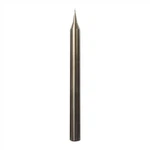
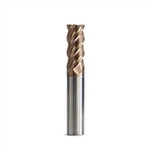
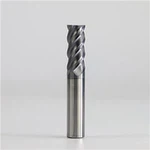
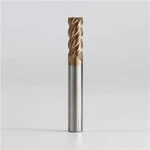
Carbide Milling Cutters
Why Choose Us
Strong Team
The Company Has a Group Of Management Personnel Who Have Been In The Industry For Many Years, And Has Accumulated Strong Milling Cutter Production Technology And Financial Strength.
Good Service
Our Company Has Been Adhering To The Development Concept Of "Paying Attention To Customer Needs, Being Technology-Oriented, And Quality-Oriented", Keeping Up With The Development Of The Times.
Production Equipment
The Company Currently Has a Batch Of Production And Testing Instruments Such As The German "Walter" Five-Axis Linkage Cnc Grinder And The German Tool Detector.
Professional Assistance
Through The Purchase Of German "Walter" Cnc Sharpeners, German-Made Tool Detectors And Other Production Testing Equipment, It Has Established Excellent Product Production System And Product After-Sales Service System.
What is Carbide Milling Cutters?
Carbide milling cutters are cutting tools used in milling machines to remove material from the surface of a workpiece. They are made from carbide, a tough and wear-resistant material that is made by sintering tungsten carbide particles with a metallic binder. Carbide milling cutters are commonly used in woodworking, metalworking, and other industries where precise cuts are needed. They are available in various shapes and sizes, including end mills, ball nose cutters, and slot drills. The primary advantage of using carbide milling cutters is that they are more durable and have a longer lifespan compared to traditional high-speed steel cutters.


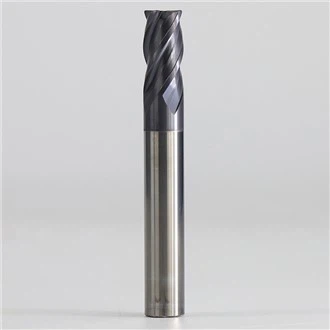
Kinbolon's carbide milling cutter is a tool made of tungsten steel (tungsten carbide, also known as tungsten-titanium alloy). Our milling cutters are generally mainly used in CNC machining centers and CNC engraving machines. It can also be installed on an ordinary milling machine to process some relatively hard and uncomplicated heat-treated materials.
Carbide milling cutters are widely used in high-speed machining. Its hardness is Vickers 10K, second only to diamond. Because of this, our cemented carbide milling cutters are not easy to be worn, and are brittle and hard and are not afraid of annealing.
Classification
1. It can be divided into standard knives, and the general diameter is (1---20mm). Carbide 2 Flute, 4 Flute Milling Cutter, Carbide Ball Nose Milling Cutter, Carbide Corner Radius Milling Cutter. 2. Non-standard knives, with variable diameters, weird shapes, and various types, such as tungsten steel small-diameter flat knives, deep groove knives, etc.
Carbide Milling Cutter Application
Carbide milling cutters are generally mainly used in CNC machining centers and cnc engraving machines. It can also be installed on an ordinary milling machine to process some relatively hard and uncomplicated heat-treated materials.
1. Carbide cylindrical milling cutter: used for machining planes on horizontal milling machines. The cutter teeth are distributed on the circumference of the milling cutter, and are divided into two types: straight teeth and helical teeth according to the tooth shape. According to the number of teeth, there are two kinds of coarse teeth and fine teeth. The helical-toothed coarse-toothed milling cutter has fewer teeth, high tooth strength and large chip space, and is suitable for rough machining; fine-toothed milling cutter is suitable for finishing.
2. Carbide face milling cutter: used for machining planes on vertical milling machines, end milling machines or gantry milling machines. There are cutter teeth on the end face and the circumference, and there are also coarse teeth and fine teeth. Its structure has three types: integral type, insert type and indexable type.
3. Tungsten carbide end mill: used to process grooves and stepped surfaces, etc., the cutter teeth are on the circumference and end faces, and cannot be fed in the axial direction during work. When the end mill has end teeth through the center, it can be fed axially.
There are multiple types of tungsten carbide end mills, each designed with a variety of different factors to enable you to choose the right end mill to match the material you’re working on and the type of project you’re going to use for. Including square end mill, ball nose end mill, corner radius end mill, taper end mills, and long neck end mill. A Carbide square end mill is also known as a "flat end mill", which is the most common one and can be used for many milling applications, including side milling, slotting, profiling, and plunge cutting.
The usage of milling methods of carbide end mills are different according to different processing conditions to improve the durability and productivity of the tool, we can choose different milling methods, such as reverse milling, along milling and symmetrical milling, and asymmetric milling.
Successive cutting and milling time each cutter tooth is continuing to cut, especially end milling, milling cutter shake relatively large, so the sensation is inevitable. When the time-frequency of the sensation and the natural frequency of the machine tool want to be the same or multiple times, the sensation is more serious. The high-speed milling cutter often needs a manual cycle of cold and hot impact, relatively simple crack and collapse, making the durability decrease.
Carbide rough end mills have a multi knife and multi-edge cutting, the total length of the cutting edge is large, which is conducive to improving the durability of the tool and production yield, there are many advantages. First, the cutter teeth simply show radial run out, which will form the cutter teeth load is unequal, uneven wear, affecting the quality of the processed surface; Second, it is necessary to meet the chip tolerance space of the cutter teeth, otherwise, it will damage the cutter teeth.
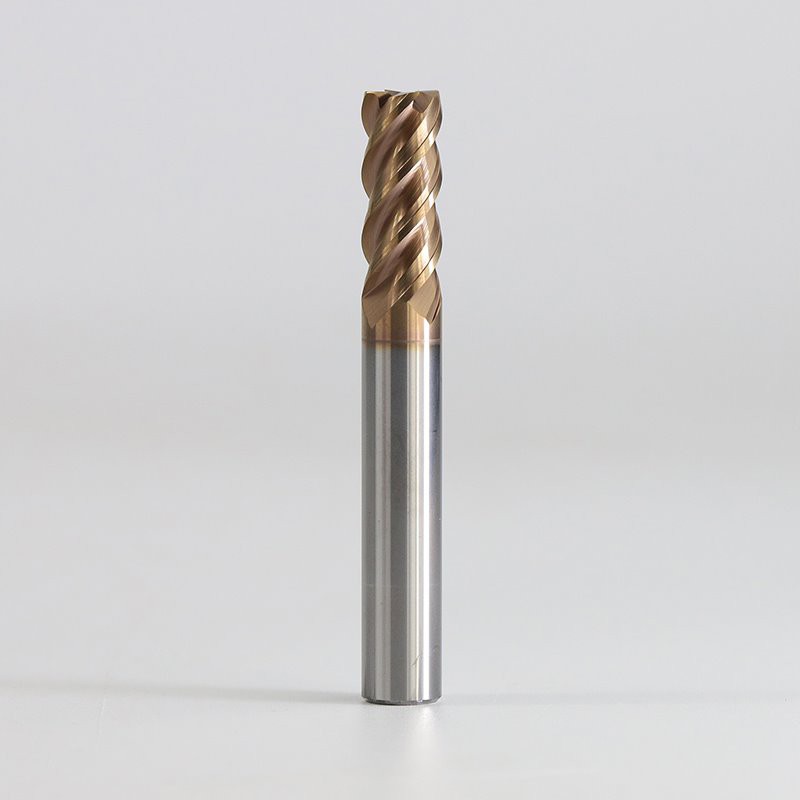
Benefits Carbide Milling Cutters
Durability
Carbide is an extremely hard material that can withstand high temperatures and pressure. This makes carbide milling cutters very durable and able to last longer compared to other materials.
Precision
Carbide milling cutters are exceptionally precise and can create intricate designs or shapes with ease. This precision is due to the high stiffness and low thermal expansion of carbide.
Speed
Carbide milling cutters are capable of cutting at faster speeds than other materials, making them an efficient and time-saving option.
Versatility
Carbide milling cutters can be used on a wide range of materials including metals, plastics, and composites. This versatility makes them ideal for a variety of industrial applications.
Cost-Effective
While carbide milling cutters may be more expensive than other materials initially, the long lifespan and high efficiency make them a cost-effective option over time.
Reduced Wear
Due to the hardness of carbide, these cutters experience significantly less wear and tear compared to other materials. This means they will need to be replaced less frequently, further contributing to their cost-effectiveness.
Types of Carbide Milling Cutters

01.Square End Mills
02.Ball End Mills | Ball Nose End Mills
03.Corner Radius End Mills
04.Router End Mill
05.Rib Processing End Mills | End Mills for Rib Processing
06.Chamfering End Mills
Carbide milling cutters are made from a type of hard and durable material known as carbide. Carbide is a composite material that consists of tungsten carbide particles held together by a binding agent, usually cobalt or nickel. Tungsten carbide is a very strong material that can withstand high temperatures and harsh conditions, making it ideal for use in cutting tools. Carbide milling cutters can also be coated with additional materials, such as titanium, to further enhance their durability and performance.

Application of Carbide Milling Cutters
Mold processing
Die and mold manufacturing is a specialist field that needs both common and specialized equipment, notably milling cutters, to allow the manufacture of small batches for particular uses. Aluminum alloys have various benefits for molding, including great machinability, high strength-to-weight ratio, and superior thermal conductivity. Metal removal rates from carbide end mills with the proper cutting geometry and coatings can be four to five times greater than those from moulded steel.
Heat-Resistant Alloy Machining
Traditionally, the highest grade tungsten carbide has been used to create end mills. They have sharp teeth as a result of their design, which enables them to polish with extreme accuracy while yet retaining a high level of brightness. The end mills may be counted on to carry out their intended function even under challenging circumstances. One of the numerous uses for this tool, which also serves a variety of other objectives, is the machining of heat-resistant alloys like titanium, stainless steel, and other materials. Some end mills can be used in processes that are carried out at high temperatures because they have a surface that is much more abrasive.
3C Processing
Aluminum and plastics are the two materials most frequently utilized in the 3C sector. Glass, ceramics, and stainless steel have now been included. End mill providers have significant demands as a result of the intense competitiveness in the 3C industry, which necessitates both quick delivery and exceptionally long tool lives. The 3C electronic, parts machining, and precision mould machining industries mostly employ the long neck and micro end mills. The mobile phone, digital, and other electronic goods in the 3C sector are specifically designed for the micro end mill and long neck end mills. They realize the most professional and highest quality processing requirements and have superior production accuracy. These end mills are more durable and produce products with extremely high finishes.
Aviation Industry
In the aviation sector, milling is widespread. For the components of aircraft wings and engines, complex end mills are employed. In the aviation sector, end mills are now one of the most crucial machining techniques, particularly when working with aluminum alloys.
Aerospace components not only make extensive use of innovative structures, technologies, and materials, but also their intricate design and lack of stiffness need the extensive use of high performance standard end mills and specialized carbide end mills to process components like engines. The carbide end mill system can readily interfere with components and holders while cutting elevated portions. As a result, it’s essential to optimize the route of the carbide milling tool, employing techniques like spiral interpolation for milling and inserting and milling rather than side milling or straight milling. A powerful machining center must be used to manufacture the turbine cartridge in terms of tooling. The analysis of the processing procedure shows that the chassis requires roughing, semi-finishing, and finishing. In the production of such aerospace components, high performance carbide end mills can be used for roughing, standard high performance carbide end mills, and non-standard high performance unique carbide end mills for semi-finishing and finishing.
How to maintain Carbide Milling Cutters
Ensure the feed of each tool head, so that when the chip thickness can reduce the damage of the hard alloy tool turning tool, the actual drilling effect can be obtained.
Adopt the correct milling cutter pitch suitable for the process, to ensure that there are not too many blades and workpiece meshing at the same time in cutting, and cause vibration, on the other hand, in the milling of narrow workpiece or milling cavity to ensure that there are enough blades and workpiece meshing.
Ensure the feed per blade is used so that the correct cutting results can be achieved when the chips are thick enough to reduce tool wear. The indexable blade with forward rake groove is used to achieve smooth cutting effect and low power.
Select the milling cutter diameter suitable for the workpiece width.
Choose the correct main deflection Angle.
Choose the right grade of carbide milling cutter.
Correct placement of milling cutters.
Use cutting fluid on carbide milling cutters only when necessary.
Choose carbide milling cutter diameter suitable for workpiece width.
The suspension system of the special tool on the spindle bearing should be as short as possible to reduce the damage of the radial part and the workpiece part to the load.
Good maintenance of carbide milling cutters can prolong the service life of the cutter and improve the working efficiency.
Check the driving force and bending stiffness of the machine tool to ensure that the required milling cutter diameter can be used on the machine tool.
Our Factory
The company has a group of management personnel who have been in the industry for many years, and has accumulated strong milling cutter production technology and financial strength. Through the purchase of German "Walter" CNC sharpeners, German-made tool detectors and other production testing equipment, it has established excellent product production system and product after-sales service system. After years of tool design, manufacture and exploration, and through cooperation with digital hardware manufacturers and machining manufacturers in the IT industry, the company has accumulated rich experience in milling cutters R&D and production, and jointly developed carbide milling cutters with excellent performance and stable quality.