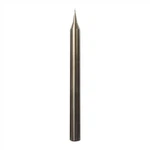
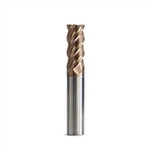
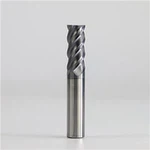
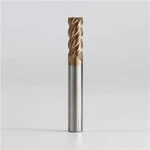
End Milling Cutters
Why Choose Us
Strong Team
The Company Has a Group Of Management Personnel Who Have Been In The Industry For Many Years, And Has Accumulated Strong Milling Cutter Production Technology And Financial Strength.
Good Service
Our Company Has Been Adhering To The Development Concept Of "Paying Attention To Customer Needs, Being Technology-Oriented, And Quality-Oriented", Keeping Up With The Development Of The Times.
Production Equipment
The Company Currently Has a Batch Of Production And Testing Instruments Such As The German "Walter" Five-Axis Linkage Cnc Grinder And The German Tool Detector.
Professional Assistance
Through The Purchase Of German "Walter" Cnc Sharpeners, German-Made Tool Detectors And Other Production Testing Equipment, It Has Established Excellent Product Production System And Product After-Sales Service System.
What is End Milling Cutters?
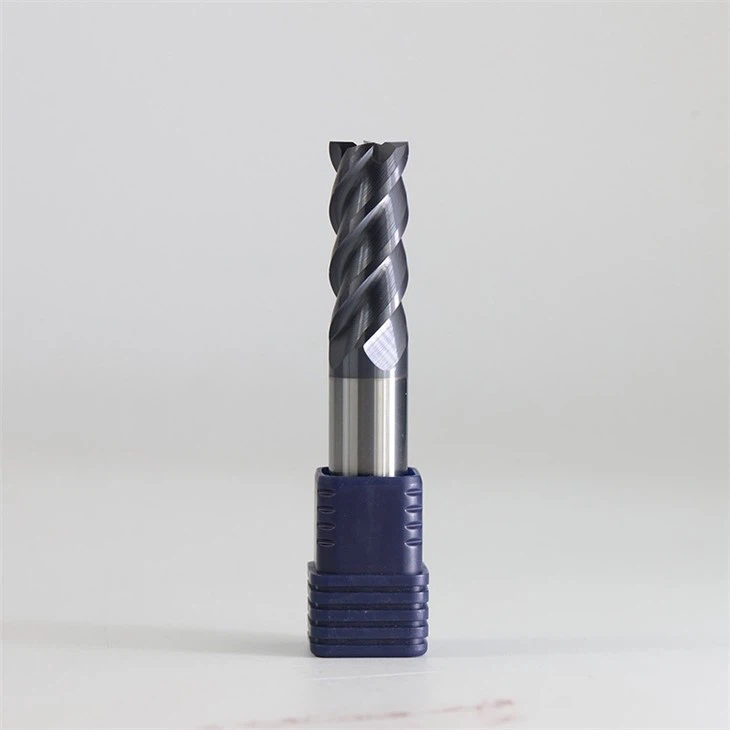
End mills are the most widely used milling cutters on CNC machine tools. There are cutting edges on the cylindrical surface and end face of end mills, which can be cut at the same time or separately. Our end mills are mainly used for face milling, groove milling, stepped face milling and profiling milling.


There are two common materials for Kinbolon's end mills: high-speed steel and carbide. Compared with the former, the latter has higher hardness and stronger cutting force, which can increase the speed and feed rate, improve productivity, make the knife less obvious, and process difficult-to-machine materials such as stainless steel and titanium alloys, but the cost is higher, and the cutting force changes rapidly. It is easy to break the knife under the situation.
We know that end mills are the most widely used milling cutters on CNC machine tools. There are cutting edges on the cylindrical surface and end face of end mills, which can be cut at the same time or separately. Our end mills are mainly used for face milling, groove milling, stepped face milling and profiling milling.
Face Milling
End mills can be used for face milling. However, because its main deflection angle is 90°, the force on the tool is mainly radial force in addition to the main cutting force, which is easy to cause the deflection and deformation of the tool bar, and it is also easy to cause vibration, which affects the processing efficiency. End mills are not recommended for machining flats without steps, except for special reasons such as small axial forces are required or face milling is occasionally required to reduce tool inventory varieties.
Groove Milling
Most of the workpieces suitable for end milling have one or more sidewall surfaces perpendicular to the bottom surface (this surface is parallel to the milling machine spindle), which brings a problem that is not found in face milling: sidewall shape and accuracy issues.
Points of Attention
Due to the small gap between the end mill and the tool holder, the tool may vibrate during the machining process. Vibration will cause the cutting amount of the peripheral edge of the end mill to be uneven, and the cutting and expanding amount will be larger than the original value, which will affect the machining accuracy and tool life. However, when the width of the processed groove is relatively small, the tool can also be vibrated purposefully, and the required groove width can be obtained by increasing the amount of cutting and expansion, but in this case, the maximum amplitude of the end mill should be limited to less than 0.02mm , otherwise stable cutting cannot be performed. The less vibration the end mill has during normal machining, the better.
When tool vibration occurs, the cutting speed and feed speed should be considered to be reduced. If there is still a large vibration after both have been reduced by 40%, the cutting amount should be considered to be reduced.
If resonance occurs in the processing system, the reason may be due to factors such as excessive cutting speed, low feed rate, insufficient rigidity of the tool system, insufficient clamping force of the workpiece, workpiece shape or workpiece clamping method, etc. At this time, adjustments should be made to adjust the cutting speed. Measures such as increasing the dosage, increasing the rigidity of the tool system, and increasing the feed rate.
Advantages of End Milling Cutters
Using the new interpolation cutting edge, the efficiency of spiral interpolation milling or slope milling is improved;
Due to the double spiral groove and the unequal distance design, HPC milling has higher efficiency;
Ideal for high dynamic HDC milling;
Process stability, automation and repeatability through optimized chip flute type and wear resistance;
Highly versatile in various materials and processing strategies;
New choices for opening and cycloid machining.
End milling cutter is a widely used multi blade tool in CNC machining, which can process flat surfaces, step surfaces, grooves, etc. The milling speed of the end mill is high and there is no clearance, so it is a high-efficiency cutting tool. The geometric structure of a milling cutter is very complex, and the overall structure of an end milling cutter can be divided into three parts: the blade, neck, and shank.
The blade is the most important part of the entire cutting tool, and its material, shape, and number of teeth determine its machining performance. The cutting edge on the cylindrical surface of the end mill is the main cutting edge, and the secondary cutting edges are distributed on the end face; The handle is the clamping part of the cutting tool, which is used to connect with the machine tool and transmit torque during milling. Its shape determines the size of the blade diameter; The neck is the part that connects the blade and the handle.
The blade is the most complex part of an end mill, therefore, the key to 3D modeling of an end mill is to model the blade. The main structure of the blade is a spiral entity, which can be obtained by scanning and cutting the generated cylinder with the vertical section of the spiral groove as the contour and the combination curve of the spiral line and a tangent line as the path, forming a spiral entity. The shank of end mills is generally divided into two categories: straight shank and tapered shank. The positioning and installation of straight shank end mills are relatively convenient. For small diameter end mills, the straight shank type is widely used.

Types of End Milling Cutters
Roughing End Mill
Although it cuts faster than the finishing end mill., its finish is rougher. Start with roughing end mill and then move to a finishing one.
Finishing End Mill
A finishing end mill has one square end and the outside diameter is smooth for creating smooth surface finishes.
Square End Mill
These end mills are sharp and perfectly square at the corners. They can be used for plunging, grooving, side milling, face milling, and counter boring.
Ball End Mill
Ball End Mills have a hemispherical tip, and it is used to machine rounded details.
Rounded Edge (Bull Nose) End Mill
These single end mills are used for making corner radii at the bottom of a milled shoulder. The rounded edges on the tips of the flutes reduce chipping, increase feed rates, and lengthen the life of the tool. It is more productive than ball end mills when used for mold profiling.
Tapered End Mill
Also known as taper degree end mills, these are used to machine an angled wall with an adjacent floor, such as pockets or a steps, in dies and molds.

There are two common materials for end mills: high-speed steel and carbide. Compared with the former, the latter has higher hardness and stronger cutting force, which can increase the speed and feed rate, improve productivity, make the knife less obvious, and process difficult-to-machine materials such as stainless steel and titanium alloys, but the cost is higher, and the cutting force changes rapidly.
Application of End Milling Cutters
Face Milling
End mills can be used for face milling. However, because its main deflection angle is 90°, the force on the tool is mainly radial force in addition to the main cutting force, which is easy to cause the deflection and deformation of the tool bar, and it is also easy to cause vibration, which affects the processing efficiency. End mills are not recommended for machining flats without steps, except for special reasons such as small axial forces are required or face milling is occasionally required to reduce tool inventory varieties.
Groove Milling
Most of the workpieces suitable for end milling have one or more sidewall surfaces perpendicular to the bottom surface (this surface is parallel to the milling machine spindle), which brings a problem that is not found in face milling: sidewall shape and accuracy issues.
Tips That Will Extend End Mill Life
Feeds and Speeds
Any discussion of proper milling operation has to start with cutting speed and feed rate. These two variables dictate much of what follows. Proper speed and feed, to a large extent, will determine chip load. For every work material and end mill design there is a narrow niche for running at optimal speed to maximize efficiency. Even if you run at the ideal spindle speed, feeding too fast will break the mill. The correct feed rate is no good, either, if the spindle speed is not dialed in. Too fast will generate enough heat to soften the tool, causing it to become dull and wear at a much greater rate.
Coatings
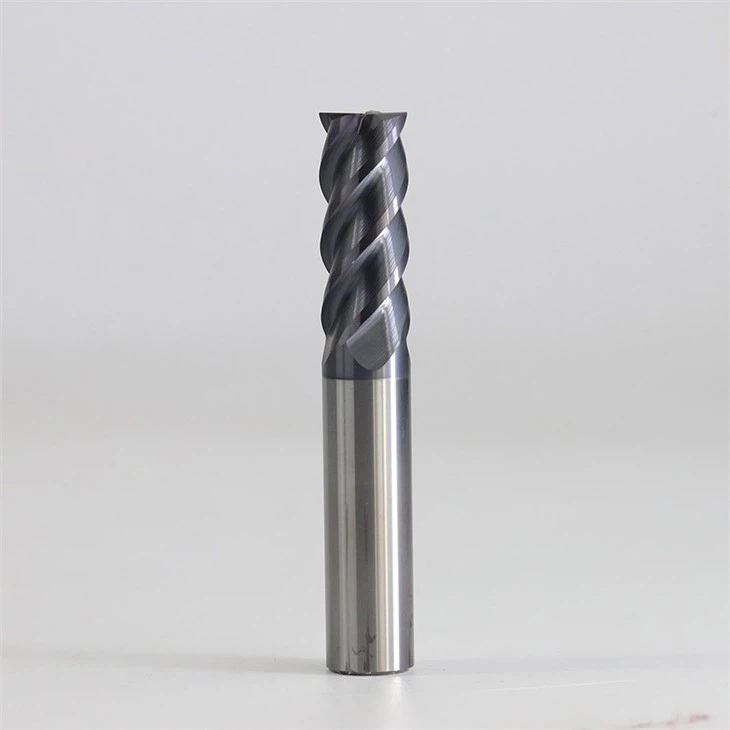
Coatings give mills a hard shell that protects cutting edges, and in many cases, allows them to withstand the high temperatures produced when processing hard materials. Made from Titanium nitride (TiN), coatings offer general-purpose protection against wear of high-speed steel (HSS) and carbide end mills. Coatings that also contain carbon (TiCN) allow carbide end mills to be run nearly twice as fast as their uncoated counterparts without undue wear from the extra heat generated. Even on HSS mills, the coating retards wear as long as the feeds and speeds do not create extreme heat. Coatings with aluminum (TiAlN) can take the heat generated by the blazing speeds and feed rates required for milling high temperature alloys, cast iron, steel alloys, and heat-treated materials.

Deflection
Trying to cut too much material at too high a speed or feed rate can result in tool deflection, which is doubly taxing on end mills. First, deflection causes the mill to bend. Constant flexing and relaxing along the mill flutes weakens them, like worrying a paperclip. Second, when the mill bows while it is inside the cut, the flutes can dig too deeply into the workpiece, in effect biting off more than it can chew. The resulting chip load can break the mill outright or cause build up and/or recutting of chips too big to evacuate effectively that leads to premature wear. Combat deflection by operating at proper speed and feed rates and by using the most rigid mill – the shortest and widest mill that will get the job done. You can shorten the tool’s effective length by “choking up” on the shank to just below where the flutes begin, while still maintaining clearance.

Chip Handling
Evacuating chips from the cutting area is a primary concern for productivity, surface finish, and especially reducing tool wear and tear. Chips absorb a lot of heat during the cutting process, and we know heat is an end mill’s worst enemy. Heat also helps bind and adhere some materials – aluminum in particular – to the end mill. As aluminum chips “weld” themselves to tool edges, a broken end mill is only a matter of time. Most aluminum mills feature only two or three flutes. Fewer flutes mean wider flutes, and more material that is expelled from the pocket, groove, or slot you’re working on with each mill revolution. Another way to prevent costly chip buildup is through liberal use of coolant. Flood coolant not only reduces the chips’ temperature below the critical point, it also helps flush them away. When using coated tools, mist coolant and air blasts is generally enough to clear the chips.
Our Factory
The company has a group of management personnel who have been in the industry for many years, and has accumulated strong milling cutter production technology and financial strength. Through the purchase of German "Walter" CNC sharpeners, German-made tool detectors and other production testing equipment, it has established excellent product production system and product after-sales service system. After years of tool design, manufacture and exploration, and through cooperation with digital hardware manufacturers and machining manufacturers in the IT industry, the company has accumulated rich experience in milling cutters R&D and production, and jointly developed carbide milling cutters with excellent performance and stable quality.